Blog
Items filtered by date: March 2026
Diabetic Foot Ulcers and the Importance of Early Care
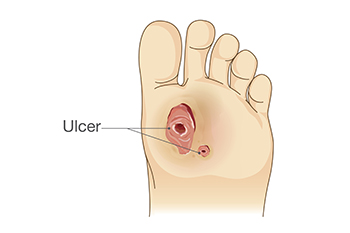
A diabetic foot ulcer is an open sore or wound that develops on the foot due to complications of diabetes, often related to poor circulation and nerve damage. Symptoms include redness, drainage, swelling, and slow-healing tissue. Risk factors include prolonged pressure, reduced sensation, and untreated minor injuries. Without proper care, these ulcers can worsen and lead to infection. Treatment often involves debridement to remove damaged tissue and pressure relief to protect the affected area and support healing. A podiatrist plays a key role in managing such wounds, improving circulation, and preventing complications. If you have diabetes and have developed a foot ulcer, it is strongly suggested that you are under the care of a podiatrist who can effectively treat foot wounds and help you to manage this serious condition.
Wound care is an important part in dealing with diabetes. If you have diabetes and a foot wound or would like more information about wound care for diabetics, consult with one of our podiatrists from South Jersey Foot & Ankle Institute. Our doctors will assess your condition and provide you with quality foot and ankle treatment.
What Is Wound Care?
Wound care is the practice of taking proper care of a wound. This can range from the smallest to the largest of wounds. While everyone can benefit from proper wound care, it is much more important for diabetics. Diabetics often suffer from poor blood circulation which causes wounds to heal much slower than they would in a non-diabetic.
What Is the Importance of Wound Care?
While it may not seem apparent with small ulcers on the foot, for diabetics, any size ulcer can become infected. Diabetics often also suffer from neuropathy, or nerve loss. This means they might not even feel when they have an ulcer on their foot. If the wound becomes severely infected, amputation may be necessary. Therefore, it is of the upmost importance to properly care for any and all foot wounds.
How to Care for Wounds
The best way to care for foot wounds is to prevent them. For diabetics, this means daily inspections of the feet for any signs of abnormalities or ulcers. It is also recommended to see a podiatrist several times a year for a foot inspection. If you do have an ulcer, run the wound under water to clear dirt from the wound; then apply antibiotic ointment to the wound and cover with a bandage. Bandages should be changed daily and keeping pressure off the wound is smart. It is advised to see a podiatrist, who can keep an eye on it.
If you have any questions please contact our office located in Mullica Hill, NJ . We offer the newest diagnostic and treatment technologies for all your foot and ankle needs.
Heel Pain With the First Step
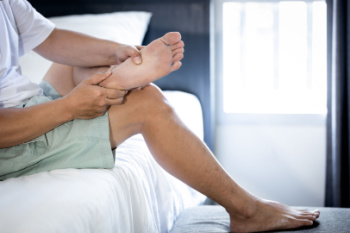
Plantar fasciitis, one of the most common causes of heel pain, occurs when the thick band of tissue along the bottom of the foot becomes irritated. This band, called the plantar fascia, supports the arch and absorbs stress during walking. When it becomes strained, small tears and inflammation can develop. Many patients notice a sharp pain in the heel with the first steps in the morning or after periods of rest. The discomfort may improve slightly with movement but often returns after long periods of standing, walking, or exercise. The heel may feel tender to the touch and the bottom of the foot can feel tight or sore. Causes may include overuse, tight calf muscles, flat feet, or footwear that lacks support. A podiatrist can diagnose plantar fasciitis through examination and imaging when needed. Treatment may include supportive shoes, custom orthotics, anti-inflammatory care, and targeted exercises. When conservative care fails, surgery may be considered. Most patients can bear limited weight in a boot shortly after surgery, with gradual return to walking over several weeks. If you have symptoms of plantar fasciitis, it is suggested that you make an appointment with a podiatrist.
Plantar fasciitis is a common foot condition that is often caused by a strain injury. If you are experiencing heel pain or symptoms of plantar fasciitis, contact one of our podiatrists from South Jersey Foot & Ankle Institute. Our doctors can provide the care you need to keep you pain-free and on your feet.
What Is Plantar Fasciitis?
Plantar fasciitis is one of the most common causes of heel pain. The plantar fascia is a ligament that connects your heel to the front of your foot. When this ligament becomes inflamed, plantar fasciitis is the result. If you have plantar fasciitis you will have a stabbing pain that usually occurs with your first steps in the morning. As the day progresses and you walk around more, this pain will start to disappear, but it will return after long periods of standing or sitting.
What Causes Plantar Fasciitis?
- Excessive running
- Having high arches in your feet
- Other foot issues such as flat feet
- Pregnancy (due to the sudden weight gain)
- Being on your feet very often
There are some risk factors that may make you more likely to develop plantar fasciitis compared to others. The condition most commonly affects adults between the ages of 40 and 60. It also tends to affect people who are obese because the extra pounds result in extra stress being placed on the plantar fascia.
Prevention
- Take good care of your feet – Wear shoes that have good arch support and heel cushioning.
- Maintain a healthy weight
- If you are a runner, alternate running with other sports that won’t cause heel pain
There are a variety of treatment options available for plantar fasciitis along with the pain that accompanies it. Additionally, physical therapy is a very important component in the treatment process. It is important that you meet with your podiatrist to determine which treatment option is best for you.
If you have any questions, please feel free to contact our office located in Mullica Hill, NJ . We offer the newest diagnostic and treatment technologies for all your foot care needs.
Aging Can Affect How You Walk

As people age, natural changes in muscle strength, joint flexibility, and balance can affect how they walk. Walking, also called gait, should be smooth, even, and steady. After about age 70, walking speed often slows as steps become shorter, often the result of weaker calf muscles that help move the body forward. Older adults may also keep both feet on the ground a little longer with each step to feel more stable. While some changes in gait are expected, others are not. Uneven steps, shuffling, dragging the toes, leaning forward, or trouble starting to walk may signal problems. These may involve joints, nerves, or certain areas of the brain that control movement and coordination. Arthritis, poor sensation in the feet, and balance disorders can all affect gait. A podiatrist can carefully assess how you stand and walk to help to identify abnormal patterns. Solutions include supportive footwear, custom orthotics, or other treatment to improve stability and comfort. If you experience problems walking normally, it is suggested that you make an appointment with a podiatrist for an exam, diagnosis, and treatment.
If you have any concerns about your feet, contact one of our podiatrists from South Jersey Foot & Ankle Institute. Our doctors can provide the care you need to keep you pain-free and on your feet.
Biomechanics in Podiatry
Podiatric biomechanics is a particular sector of specialty podiatry with licensed practitioners who are trained to diagnose and treat conditions affecting the foot, ankle and lower leg. Biomechanics deals with the forces that act against the body, causing an interference with the biological structures. It focuses on the movement of the ankle, the foot and the forces that interact with them.
A History of Biomechanics
- Biomechanics dates back to the BC era in Egypt where evidence of professional foot care has been recorded.
- In 1974, biomechanics gained a higher profile from the studies of Merton Root, who claimed that by changing or controlling the forces between the ankle and the foot, corrections or conditions could be implemented to gain strength and coordination in the area.
Modern technological improvements are based on past theories and therapeutic processes that provide a better understanding of podiatric concepts for biomechanics. Computers can provide accurate information about the forces and patterns of the feet and lower legs.
Understanding biomechanics of the feet can help improve and eliminate pain, stopping further stress to the foot.
If you have any questions please feel free to contact our office located in Mullica Hill, NJ . We offer the newest diagnostic and treatment technologies for all your foot and ankle needs.
Heel Pain in the Morning?

Heel pain can negatively affect your day-to-day life. Simple activities like walking can become incredibly uncomfortable or painful due to heel pain.
Don’t live with heel pain and get treated.
Causes of Foot Pain
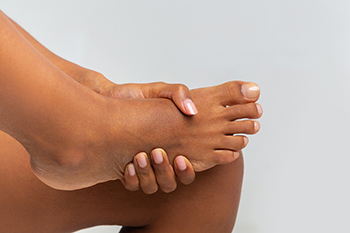
Foot pain affects up to one in four people at any given time and can interfere with walking, balance, and overall quality of life. Pain may come from the foot bones, joints, ligaments, tendons, nerves, skin, or toenails. Common causes of foot pain include tendonitis, which is inflammation of a tendon, and stress fractures, which are small cracks in a bone caused by repeated force. Other causes include arthritis, which is joint inflammation that leads to stiffness and swelling, nerve compression, and structural problems like bunions or flat feet. Mechanical overload, another factor, means the foot tissues are exposed to more force than they can handle over time. Some people develop neuropathic pain, which occurs when the nervous system becomes irritated or damaged. It can cause burning, tingling, or sharp sensations. A podiatrist can perform a detailed examination and order imaging to determine the exact source of foot pain and create a targeted treatment plan. If you have foot pain that interrupts daily activities, it is suggested that you make an appointment with a podiatrist for an exam, diagnosis, and treatment.
Foot Pain
Foot pain can be extremely painful and debilitating. If you have a foot pain, consult with one of our podiatrists from South Jersey Foot & Ankle Institute. Our doctors will assess your condition and provide you with quality foot and ankle treatment.
Causes
Foot pain is a very broad condition that could be caused by one or more ailments. The most common include:
- Bunions
- Hammertoes
- Plantar Fasciitis
- Bone Spurs
- Corns
- Tarsal Tunnel Syndrome
- Ingrown Toenails
- Arthritis (such as Gout, Rheumatoid, and Osteoarthritis)
- Flat Feet
- Injury (from stress fractures, broken toe, foot, ankle, Achilles tendon ruptures, and sprains)
- And more
Diagnosis
To figure out the cause of foot pain, podiatrists utilize several different methods. This can range from simple visual inspections and sensation tests to X-rays and MRI scans. Prior medical history, family medical history, and any recent physical traumatic events will all be taken into consideration for a proper diagnosis.
Treatment
Treatment depends upon the cause of the foot pain. Whether it is resting, staying off the foot, or having surgery; podiatrists have a number of treatment options available for foot pain.
If you have any questions, please feel free to contact our office located in Mullica Hill, NJ . We offer the newest diagnostic and treatment technologies for all your foot care needs.
Risk Factors for Bunions
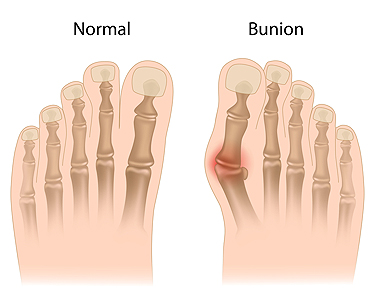
Bunions, also called hallux valgus, develop when the big toe drifts toward the second toe and the joint at its base sticks out. The primary risk factor for bunions is inherited foot structure, particularly a misaligned metatarsophalangeal, or MTP joint. People with flat feet, excessive pronation, or loose-joint mobility place uneven pressure across the forefoot, increasing the likelihood of progression. Arthritis, prior foot injuries, and certain neuromuscular conditions can also weaken joint stability and contribute to deformity. Although tight or high-heeled shoes do not directly cause bunions, they commonly aggravate symptoms and speed irritation in people already predisposed. A podiatrist evaluates alignment, orders imaging, and provides medical treatment options to reduce pain, limit deformity progression, and improve walking function. If you have foot problems associated with bunions, it is suggested that you make an appointment with a podiatrist for an exam, diagnosis, and ongoing treatment.
If you are suffering from bunion pain, contact one of our podiatrists of South Jersey Foot & Ankle Institute. Our doctors can provide the care you need to keep you pain-free and on your feet.
What Is a Bunion?
Bunions are painful bony bumps that usually develop on the inside of the foot at the joint of the big toe. As the deformity increases over time, it may become painful to walk and wear shoes. Women are more likely to exacerbate existing bunions since they often wear tight, narrow shoes that shift their toes together. Bunion pain can be relieved by wearing wider shoes with enough room for the toes.
Causes
- Genetics – some people inherit feet that are more prone to bunion development
- Inflammatory Conditions - rheumatoid arthritis and polio may cause bunion development
Symptoms
- Redness and inflammation
- Pain and tenderness
- Callus or corns on the bump
- Restricted motion in the big toe
In order to diagnose your bunion, your podiatrist may ask about your medical history, symptoms, and general health. Your doctor might also order an x-ray to take a closer look at your feet. Nonsurgical treatment options include orthotics, padding, icing, changes in footwear, and medication. If nonsurgical treatments don’t alleviate your bunion pain, surgery may be necessary.
If you have any questions, please feel free to contact our office located in Mullica Hill, NJ . We offer the newest diagnostic and treatment technologies for all your foot care needs.

